Escape Velocity of a Travel Writer
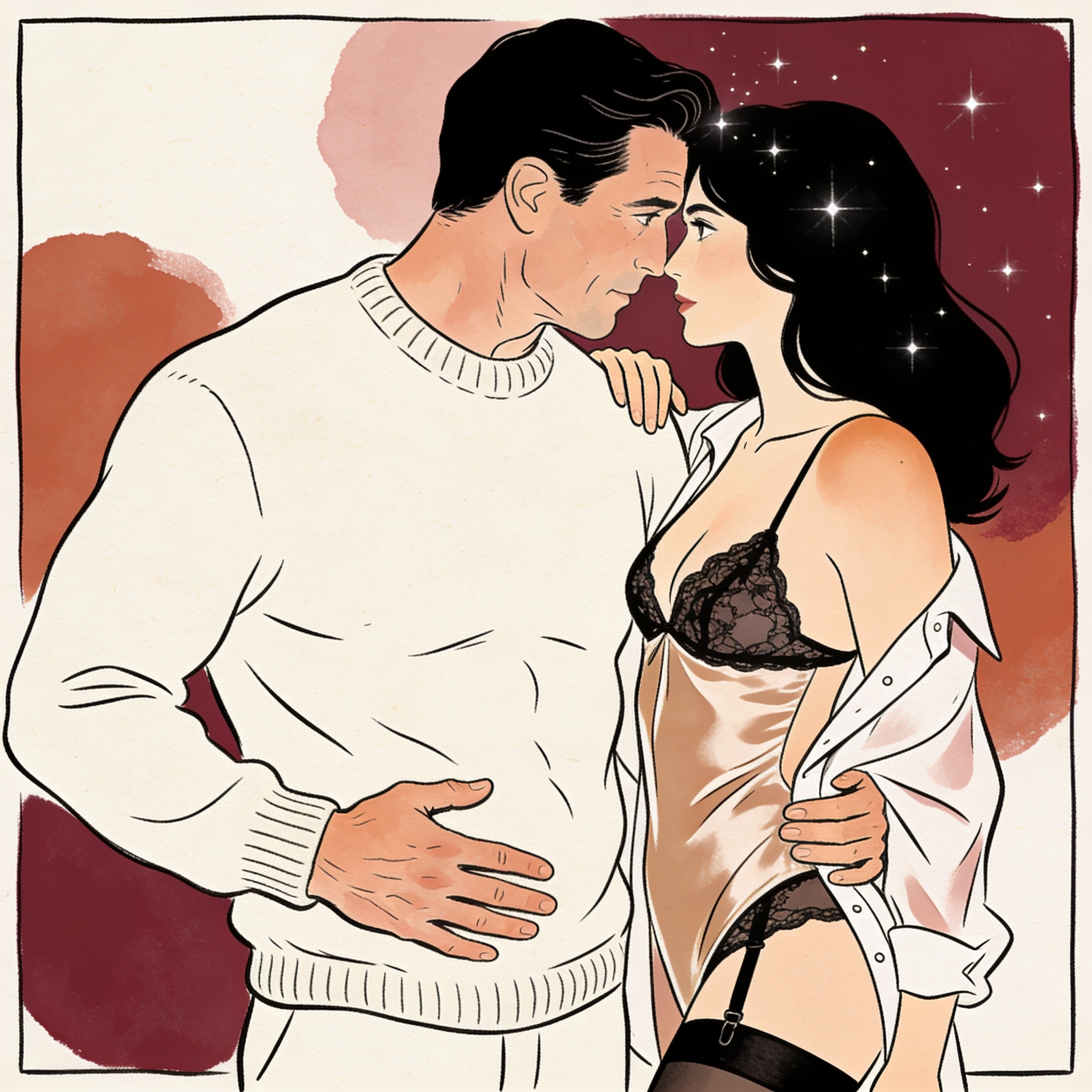
# A Dangerous Orbit # Part I— The Travel Writer ## Chapter 1– Blake The observation blister was a silent, inverted eye on the flank of the colossal ship. Beyond the triple-reinforced transplex, the stars weren’t points of light but s
Chapter 1
The observation blister was a silent, inverted eye on the flank of the colossal ship. Beyond the triple-reinforced transplex, the stars weren’t points of light but smears of iridescent gas, the *Odyssey* moving at a speed that warped the firmament itself. The hum of the gravity plating was the only sound, a vibration I felt in my teeth, in the marrow of my bones. I stood in the dim glow of the running lights, my hands resting on the cool railing. The reflection in the glass showed a man who looked every bit the weary travel writer: brown hair tousled from artificial air circulation, the shadow of stubble gracing a jaw that was set, but not grim. My eyes, a deep, unremarkable brown, held the distant gaze of someone accustomed to witnessing wonders.
The reflection lied.
Beneath the simple synth-wool sweater, a body built less for poetry and more for survival carried its weight with a deceptive ease. The softness around my middle, a gift from years of deep-cover sedentary work and ration-bar diets, was a conscious choice. A ‘dad bod,’ as the old files would call it, was invisible. It suggested a man more interested in local cuisine than combat drills, a man who wouldn’t, *couldn’t*, move with the lethal precision now coiled just beneath the surface. I let my hand drift to my stomach, feeling the solid muscle beneath the forgiving layer. It was a disguise as effective as any forged passport.
The ESV *Odyssey* wasn't a ship; it was a mobile city-state, a five-kilometer-long statement of Earth's cautious optimism. It housed ten thousand souls: diplomats, scientists, merchants, and the inevitable drift of dreamers and fugitives that clung to the edges of human expansion. My suite was modest, befitting my cover’s mid-tier success. The main room held a desk currently littered with datapads displaying notes on Aethelian hydroponic festivals and the linguistic quirks of the Proxima trade guilds. The real story was hidden in plain sight.
My travel case, scuffed and familiar, sat open on the bed. Nestled among lenses for a high-resolution holocam, a tripod with telescoping legs of lightweight titanium, and rolls of climate-sensitive fabric for camera maintenance, were the components. The power cell was disguised as a backup battery pack, its output ratings subtly altered in its casing. The emitter matrix was threaded into the structure of a macro-lens adapter. The hilt itself, the most dangerous piece, was separated: the grip lived inside the hollow core of the tripod’s central column, the activation plate a seemingly decorative inlay on my portable datapad. A laser sword. A weapon banned on every civilian vessel in Earth space. A tool of my real trade.
My briefing had arrived an hour after docking clearance, embedded in an editorial note from my supposed publisher.
***
*‘Blake—excellent initial impressions. The editors are particularly keen for you to explore the logistical marvel of the Odyssey. How does such a large community manage its supply chains? The flow of cargo is, they feel, the lifeblood of the mission. Dive deep into the shipping manifests, the freight corridors. Our readers eat that stuff up.’*
***
The translation was clear, burned into my mind from years with The Federal Earth Protection Service, FEPS speak for, *Investigate the anomalous cargo movements. Trace the financial trails. Find the leaks.*
And then, the final line of the message, innocuous to any scanner: *‘You’ll be meeting with Editor Cole tomorrow for a background interview. Be thorough.’*
Derek “Finn” Cole. The name was an anchor in the swirling unknown. My handler. My friend. The only tether I had to the world that had sent me here. Knowing he was with me if not aboard, operating under the same layers of deception, was a comfort so profound it felt like a vulnerability. I couldn’t afford comfort. I could at least reach out if I needed help, not that he could send it.
I left the observation blister and walked the main thoroughfare, the Atlas Concourse. It was a canyon of light and sound, a forced simulation of a terrestrial boulevard. Shops emitted curated scents of pine and baked goods. People flowed past in a river of colorful civilian garb. I observed them with a writer’s apparent curiosity, a spy’s ruthless calculus.
A Vaelorian?
They were rare this deep in Earth-aligned space, and never openly. Their physiology was subtle—a faint copper sheen to the skin under certain light, a slightly elongated cervical vertebra that gave their posture an unnerving, elegant rigidity. I saw none. But their agents wouldn’t be obvious. They would be like me: woven into the fabric, their sharp edges padded with convincing backstory.
My path took me past the main security nexus. The entrance was a wide arch of brushed steel, flanked by two personnel in the crisp, white and silver uniforms of the *Odyssey*’s internal force. Their eyes swept the crowd, not with the bored glare of mall cops, but with a focused, analytical patience that I recognized instantly. Professional. Good. The security net here was tight, sophisticated. It had to be, to protect this floating embassy.
It made my task harder. It also meant my opposition was facing the same hurdles. This was a game played on a tilted board, in the dark.
I wondered who had designed this net. The official roster listed a Chief of Security, but the briefing had been sparse on details beyond my cover. The operational mind behind this… it had a certain elegance, a meticulousness that spoke of more than standard procedure.
A name floated up from the personnel manifest I’d skimmed during the boarding process: **Victoria**. Chief Of Security. Her domain was the flow of all material, and personnel, through the ship—the very “logistical marvel” my “editor” was so keen on. She would have access to manifests, corridors, schedules. She would see the holes, the anomalies, if she knew how to look.
Or if she was the one creating them.
The thought was a cold trickle down my spine. *Access*. How much could I get? How close could I get? A writer, charming, observant, non-threatening—a man with a soft middle and a head full of trivial questions about cargo bays and hydroponic nutrient schedules. He could get very close indeed. The method was a familiar ghost: proximity, rapport, the careful exchange of favors and confidences. A dance.
But this was different. The stakes were planetary. And the weapon hidden in my tripod meant the dance could turn lethal in a heartbeat.
Back in my suite, the silence was absolute. I assembled my holocam, the clicks and snaps of the components a mundane ritual. My fingers, thick and capable, worked with an artisan’s care. These were the hands of a writer, I reminded myself. They documented; they did not destroy.
I powered on the datapad, the activation plate cool under my thumb. A faint, almost imperceptible glyph glowed for a nanosecond beneath the screen—the FEPS seal, acknowledging the silent check-in. Finn was listening. The ship, for all its size, felt suddenly very small, and very, very large.
Sleep was a protocol, not a need. I lay in the dark, the gentle thrum of the ship’s engines a constant through the mattress. My mind didn’t race; it methodically arranged pieces on a board only I could see. Cargo movements. Financial trails. Disappearances. A Vaelorian operation of unknown scale, its purpose a void at the center of the mystery.
And across that void, one point of potential contact: Victoria, in the heart of the ship’s defenses.
My last conscious thought was not of empires or intrigue, but of a purely practical, deeply personal assessment. The mission would require infiltration, persuasion, a performance of vulnerability and desire. My body, this useful, disguised body, would be part of the toolset. Its solidity, its very unremarkableness, was the perfect sheath for the blade of my intent. The softness was a lure, the strength beneath it a trap. In the dark and mysterious bowels of the *Odyssey*, where truth was the most precious and dangerous cargo of all, I would need every part of the man I pretended to be, and every ounce of the agent I was. The simmer had begun. The atmosphere was charged, electric with everything left unsaid, every glance yet to be exchanged, every touch that hung in the future, promising not pleasure, but revelation.
Chapter 2
The air in the main embarkation hall had a sterile, recycled chill. I stood behind the primary security console, my gaze sweeping across the streams of data and live holofeeds. Civilians filed through, their expressions a mix of awe and travel fatigue. My team was good, but good wasn’t infallible.
“Scan anomaly, Row Four,” I said, my voice quiet in my deputy’s earpiece. “Second passenger. The carry-on. Thermal diffusion pattern is wrong for stated contents.”
Lieutenant Naomi Vega didn’t question it. She moved with an athletic grace, intercepting the passenger—a merchant from the look of him—with a disarming smile. A minute later, she was holding up a shielded energy core, the kind used to power illegal neural-jacks. My junior officer at the scanner had missed it, lulled by the merchant’s clean manifest. Vega caught my eye and gave a slight, triumphant nod. I allowed myself a thin sliver of satisfaction before the weight of the ship settled back on my shoulders.
Vega fell into step beside me as we moved towards my office. “Another one for the vault. They’re getting clever with the shielding.”
“They’re always getting clever,” I replied. “We just have to be more so.”
Naomi Vega was in her early thirties, her dark hair pulled into a severe, efficient knot that somehow couldn’t contain her energy. She was confident, brilliant, and occasionally lacked the restraint that twenty years in service had beaten into me. I trusted her implicitly, which was a rare and dangerous thing.
“So,” she said, scrolling through a datapad. “Command sent down a priority memo. We’re to offer ‘full and courteous cooperation’ to a Mr. Cameron. Interstellar travel writer. He’s doing some big feature on the *Odyssey*.”
I stopped walking. “A writer. They want me to babysit a scribe?”
“Looks that way. He’s already aboard. Suite on Deck Seven, Atlas Quadrant.” She smirked. “Maybe he’ll write about my keen eyes and stunning professionalism.”
“He’ll write about the food and the view,” I muttered, pushing into my office. The door sealed behind me with a hushed hiss. The space was neat, tactical, a reflection of my mind. “I don’t have time for guided tours. You handle it.”
“He’s requested a meeting with the Chief of Security. Specifically. Wants to discuss ‘logistical marvels.’” Vega leaned against the doorframe. “Orders are orders, Chief. From the top.”
I sighed, the sound lost in the hum of the ship. “Fine. Schedule it for tomorrow. Keep it short.”
Alone, the silence was a physical presence. I activated my personal, encrypted terminal. The day’s reports were a litany of minor breaches and managed risks. I was halfway through a threat-assessment update when the priority alert flashed—a cipher sequence I hadn’t seen in over a year, one that bypassed all shipboard protocols. My stomach turned to ice.
I accepted the transmission. The holoprojector resolved the image of a man sitting in a comfortable, terrestrial study. Admiral Derek Vale. Late fifties, his hair once dark now elegantly silvered at the temples. His face was a map of dignified authority, his eyes calm, his smile almost gentle.
“Alexandra,” he said, his voice warm, paternal. “It’s been too long.”
“Admiral.” My own voice was flat, a sheet of steel. “This is an unsecured channel.”
“For you, perhaps. For me, it’s perfectly secure.” He leaned forward, clasping his hands. “I need a small favor. A minor adjustment to your security roster for Cargo Bay Alpha-7, the midnight rotation tonight.”
I stared at him. “You’re asking me to compromise my ship’s security protocol.”
“I’m asking you to reassign two personnel. The usual team to a different patrol route. A simple gap.”
“Why?”
“That’s not your concern. It’s a matter of broader security. Earth security.”
A cold knot tightened in my chest. “I refuse. Sir. My duty is to this vessel. I won’t create a vulnerability.”
His gentle expression didn’t flicker. He picked up a different datapad from his desk. “How is your sister, Alexandra? Emily, isn’t it? Living in New Vancouver, under her new name. The gallery is doing well.”
The blood drained from my face. *Emily*. The secret. The incident seven years ago—a defensive action that had crossed a line, an outcome I’d buried to protect her from the consequences. Vale had been my mentor then. He’d helped me bury it. He’d said, “*Let me handle this, Taylor. For her sake.*” I’d believed him. I’d been grateful.
Now I saw the ledger. He hadn’t been protecting me. He’d been purchasing me.
“You wouldn’t,” I whispered, the words sand in my throat.
He turned the pad around. It showed a live feed from a public transit stop in New Vancouver. A woman with my eyes was waiting for a tram, unaware. The timestamp was real-time. Standing near her, looking at nothing in particular, was a man in a gray coat. One of Vale’s.
“I would,” Vale said softly, sadly. “To protect the greater good, sometimes we must leverage personal good. The rotation, Alexandra. Do we understand each other?”
The distance between the stars meant nothing. He could reach her. He would.
My fingers trembled as I called up the duty roster. I altered the assignments for Cargo Bay Alpha-7, creating a precise, thirty-minute window of reduced coverage. The system logged the change under my authority.
“It’s done,” I said, my voice hollow.
“Thank you, Alexandra. You’re still the capable woman I know. This is the last time I’ll need to ask.”
The transmission ended. I sat in the sudden silence, the ghostly afterimage of my sister’s safe, mundane life burning behind my eyes. The lie I told myself was brittle, pathetic: *This is the last time*.
I looked at the schedule for tomorrow. Cameron, travel writer. Another variable. Another potential leak. Or perhaps, another kind of threat. I had no more room for errors, but the ship, vast and dark, was suddenly full of them.
Chapter 3
The panoramic observation lounge they called the Zenith was a cathedral of starlight. I’d spent the morning walking the ship’s commercial arteries, a pleasant drone asking about water reclamation and waste processing. Now, I needed color. A bar was a better sensor array than any official schematic.
The bartender was polishing a glass with the focused serenity of a Zen master. He looked up as I approached the curved synth-wood counter, his smile immediate and easy. “New blood,” he said, his voice a warm, gravelly baritone. “Welcome to the quietest party in the galaxy. What’s your poison?”
“Cameron,” I said, extending a hand. “Travel writer. And whatever you recommend for a man trying to understand the pulse of this place.”
“Theo Bennett,” he said, gripping my hand with a strength that matched his broad shoulders. “And the pulse, my friend, is best taken with a Saturn’s Ring.” He began mixing without waiting for confirmation. “Clear spirits, a hint of citrus dust, and a ribbon of something smoky that reminds you of home, even if you can’t remember where that is.”
I chuckled, setting my recorder on the bar. “Mind if I? For the article.”
“Be my guest. A bartender’s an open book, though most people only read the dirty jokes.” He finished the drink, the layered colors swirling like a nebula. “So, you’re writing the great *Odyssey* opus. Everyone comes through here eventually. The diplomats, the engineers trying to forget their equations, the lovers, the lonely.”
I took a sip. It was superb. “What’s the talk of the ship lately, Theo? Beyond the official marvels.”
He leaned his thick forearms on the bar, his sharp eyes scanning the sparse afternoon crowd. “The usual murmur. The head of Xenobotany’s sleeping with the Communications Officer’s spouse. A scandal involving missing luxury chocolates from the diplomatic pantry.” He grinned, his elaborate mustache twitching. “But the *real* chatter… it’s about the tightness. Security’s been jumpy for weeks. Not the obvious stuff. Subtle. Rerouted freight elevators. Unscheduled drills for the internal teams in the lower cargo bays. Commander Evans running her people ragged.”
The name was a live wire. “Evans?”
“Chief of Security. Sharp as a monomolecular blade and, if the rumors are to be believed, just as likely to cut you.” He lowered his voice. “She’s been burning the midnight plasma, personally. Her second, Vega—hell of an officer—looks like she hasn’t slept in a month. Something’s got them spooked. And not just them. There’s a… chill. A few of the regular merchant types have vanished from their usual stools. Not left the ship, just… keeping to their berths.”
My writer’s mask held, a look of fascinated curiosity. “Trouble with the cargo?”
“Could be. Bay Alpha-7’s had some odd comings and goings. Late cycle. The kind of activity that usually requires a Chief’s override.” He shrugged, polishing another glass. “But what do I know? I just pour the drinks and listen.”
It was more than I’d hoped for. A pattern. A specific bay. A Chief under strain. I was about to ask another question when the atmosphere in the lounge shifted. It wasn’t a sound, but a sudden, focused silence from the staff. Theo’s eyes flicked toward the entrance, his posture infinitesimally straightening.
She entered like a storm finding its eye.
Victoria was shorter than I’d imagined, but her presence filled the vast room. Her uniform was impeccable, but her face was a mask of controlled exhaustion, green eyes burning with an energy that was half fury, half despair. Her brown hair was pulled back severely, emphasizing the elegant line of her neck. She moved with a lethal, tired grace to the far end of the bar, not seeing anyone.
Theo was already moving, placing a neat, amber-colored whiskey before her without a word. She gave a barely perceptible nod of thanks, her fingers curling around the glass.
My journalist’s instinct warred with something far more primal. I’d seen beautiful women. I’d seen powerful ones. This was a force of nature, crackling with a vulnerability she’d die before showing. The attraction was a physical punch to the gut, immediate and inconvenient.
She must have felt the weight of my gaze. Her head turned slowly, those brilliant green eyes locking onto mine across the dim space. There was no warmth in that look, only a cool, analytical assessment that saw past the writer, past the soft sweater, and probed for the bedrock beneath. A challenge. An unspoken question.
I held the look, offering a small, neutral smile. A fellow professional acknowledging another, nothing more.
After a long moment, she picked up her glass and walked over. She didn’t sit, just stood beside my stool, her scent cutting through the lounge’s recycled air: ozone, stress, and a faint, clean soap. “You’re staring,” she said, her voice lower than I expected, textured with fatigue.
“I’m a writer,” I replied, keeping my tone light. “It’s what we do. You walk into a room and rewrite its entire gravity field. It’s worth noting.”
A flicker of something—amusement? annoyance?—crossed her features. “Cameron. The travel writer. I saw your appointment on my calendar.”
“The formidable Chief Evans. I’ve been hearing about your logistical marvels all day.” I gestured to the stool beside me. “Can I buy you a second one? I promise my questions are less tedious than my official list.”
She studied me again, the calculation clear. Then, with a sigh that seemed to deflate her by a millimeter, she slid onto the stool. “One drink. And you can start by telling me what a travel writer really finds so interesting about cargo manifests.” Her eyes never left mine, and in their depths, beneath the professional ice, I saw a reflection of my own buried heat. The game had just become infinitely more dangerous, and I wanted nothing more than to play.
Chapter 4
One drink. That was the agreement. A simple transaction: I give him some benign quotes for his article, he goes away, and I return to the private hell of my command. The whiskey Theo poured was a lifeline, the burn in my throat the only sensation I wanted to feel. But then he looked at me.
Cameron. The travel writer.
His stare wasn’t the usual—gawking at the uniform, or sizing me up with clumsy aggression. It was… appreciative. Analytical, even. He saw the exhaustion, the strain, and he didn’t look away in pity or discomfort. He acknowledged it, like a fellow professional noting a challenging working condition. The attraction was an unwelcome jolt, a surge of something alive in the numb cold Vale had left inside me.
He was attractive. In a rumpled, unassuming way. The stubble, the soft-looking sweater that did nothing to hide the solid width of his shoulders. His eyes were warm and clever, and his smile when I approached was disarming. Funny, even. He made a joke about gravity fields.
A stranger. A harmless writer.
*He has nothing to do with any of this.*
The thought was a clarion call. It cut through the static of fear and duty. Here was a man who knew nothing of admirals or threats, of cargo bays and sisters in gray coats. He represented a thirty-minute window of not thinking. Of feeling something other than this coiled, corrosive dread.
I slid onto the stool beside him. “One drink,” I said, my voice tighter than I intended. “And you can start by telling me what a travel writer really finds so interesting about cargo manifests.”
He chuckled, a low, pleasant sound. “The truth? They’re the most honest part of any voyage. People lie. Ship’s logs can be fudged. But cargo? It tells you what a place really values, what it lacks, what it’s hiding. It’s a story of needs and secrets.” He took a sip of his own drink, his brown eyes holding mine. “But I have a feeling you already know that.”
He was sharp. Too sharp for comfort, but that only made the forbidden pull stronger. This wasn’t a man I could easily manage. This was a man who might match me, in a different arena. The danger of it was electrifying.
“Maybe,” I conceded, finishing my whiskey. The alcohol was a warm ball in my stomach, melting some of the ice. I signaled Theo for another, ignoring the raised eyebrow. My body was humming, a live wire looking for a ground. I turned fully to face Blake, my knee brushing against his leg under the bar. I didn’t move it away.
“Your questions are tedious, Ennis. I’ve read the list. But you’re not tedious.” I let my gaze drop to his mouth, then back to his eyes. “I have a counter-proposal.”
His expression shifted, the easy humor deepening into something more intent, more focused. “I’m listening.”
“My shift ended an hour ago. My quarters are three decks down. They are quiet, private, and contain a bottle of whiskey significantly better than this.” I leaned in slightly, lowering my voice so only he could hear. The scent of him—clean soap, something earthy—cut through my own stress. “You can interview me there. Or we can skip the interview altogether and find a much more effective way to stop thinking for a while.”
I saw the shock register, followed by a flare of pure, uncomplicated heat. No games, no positioning. Just a direct, unmistakable offer. A lifeline thrown from my sinking ship.
He was silent for a beat, his eyes searching my face. Looking for the trap, the professional complication. He wouldn’t find it. This was the one part of my life Vale didn’t own.
“The article can wait,” he said, his voice a rough velvet. He placed a few cred-chips on the bar and stood, offering me his hand. It was large, warm. “Lead the way, Chief.”
I took his hand, a simple touch that sent a current straight through my core. I didn’t let go as I led him out of the lounge, away from the eyes of my crew, into the neutral, anonymous corridors. For the next few hours, Cameron wouldn’t be a writer. He would be a tool for my survival, a distraction made of warm hands and clever smiles. And I would use him mercilessly.
I purposely swung my hips hopping the tight, white faux leather of my uniform was shaping my ass in a way that would get him hard as he followed me.
The door to my quarters hissed shut, sealing us in a silence so profound I could hear the blood pounding in my ears. The sterile, orderly space felt suddenly alien, charged with the presence of the man standing just inside it. I walked to the small dispenser unit, my back to him, and poured two fingers of the expensive whiskey. I didn’t offer him one.
“Ground rules,” I said, turning to face him. I kept my voice flat, the voice I used for disciplinary hearings. “This is a one-night stand. A stress relief valve. Nothing more. You get your story. I get… this. Afterwards, you stay out of my way, and I stay out of yours. Is that understood?”
Blake leaned against the wall by the door, his hands in his pockets. That damned, easy smile played on his lips. “Crystal clear, Chief. A transaction. I can work with that.”
“Good.” I took a long swallow, letting the fire spread through my chest. It didn’t touch the cold knot Vale had tied there. “Now take off your clothes.”
His smile didn’t waver, but his eyes darkened. He pushed off the wall and began to obey, with a slow, deliberate confidence that was infuriatingly attractive. The soft synth-wool sweater came over his head, revealing shoulders that were far broader and more defined than the fabric had suggested. His chest was solid, a landscape of lean muscle dusted with dark hair that trailed down a taut stomach. The ‘dad bod’ was a masterful lie. This was the body of a man who used his strength, who carried it with a quiet, unassuming power. My breath hitched, a purely physical reaction I couldn’t suppress.
He undid his trousers, let them fall, and kicked them aside. He stood before me, completely naked, utterly unashamed. He was thick and already hard, his cock a heavy, promising weight against his thigh. My mouth went dry. He was thicker than I had even imagined. I was going to be sore in the morning, good.
“Impressive,” I managed, forcing a tone of clinical appraisal. It sounded weak, even to me.
He said nothing. Just watched me, his gaze a physical heat on my skin.
The power dynamic I’d tried to establish was slipping. I needed to reclaim it. I needed to see him submit. The thought was a dark, thrilling curl in my gut.
“Crawl to me,” I commanded, my voice dropping to a husk.
For a heartbeat, he didn’t move. I saw the calculation in his brown eyes, the brief flash of a man unaccustomed to taking orders. Then, with a grace that stole the air from my lungs, he sank to his knees. He didn’t look away from my face as he began to move forward, the muscles in his shoulders and back rippling with the motion. The sight of him, this powerful, clever man on his knees for me, sent a jolt of pure, possessive lust straight to my core.
He stopped when his face was level with my thighs. I looked down at him, my heart hammering against my ribs.
“Now,” I whispered. “Take it off. With your teeth.”
A slow, dangerous smile touched his lips. He leaned in. I felt the heat of his breath through the fabric of my uniform pants first, then the gentle, scraping pressure of his teeth on the fastener of my tunic. He worked with a frustrating, exquisite slowness, his head tilted, his mouth pulling and tugging. The sound of the zip parting was obscenely loud. He used his teeth and chin to nudge the stiff material from my shoulders, his nose brushing against the thin undershirt beneath. The cool air of the room hit my skin, but it was nothing compared to the heat of his proximity.
He moved lower, his teeth finding the waistband of my pants. He looked up at me as he tugged, his eyes blazing with a challenge I’d issued and now desperately wanted him to win. The fabric slid over my hips and down my legs. I stepped out of it, leaving me in just my boots, undershirt, and plain black underwear. He didn’t stop. He nudged my legs apart with his shoulder and pressed his face against the damp cotton covering my pussy, inhaling deeply. A ragged groan vibrated from his chest into my flesh.
“You’re in charge, Chief,” he murmured, his voice thick. “But you taste like a promise I intend to keep.”